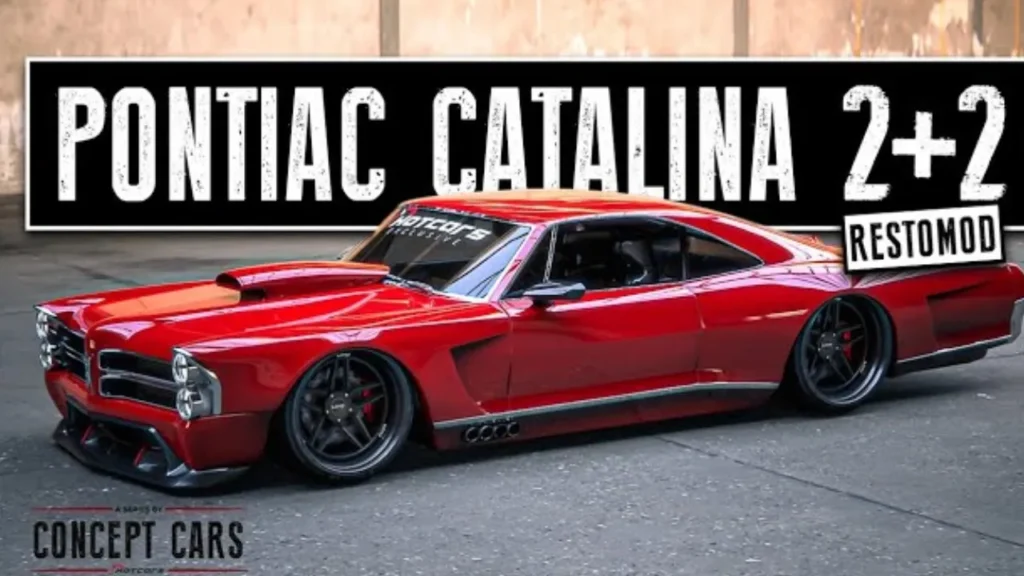
The 1965 Pontiac Catalina 2+2 remains one of the most iconic full-size American muscle cars ever produced. Known for its aggressive stance and massive 421ci V8, the Catalina 2+2 was Pontiac’s answer to the high-horsepower era of the 1960s. It delivered luxury, size, and serious performance—earning its reputation as the “big brother to the GTO.”
Today, the legend lives on through restomods, where builders blend vintage character with cutting-edge engineering to create a machine that looks decades old but drives like it rolled out of a modern showroom.
Specs – 1965 Pontiac Catalina 2+2 Restomod
| Feature | Specification |
|---|---|
| Original Model Year | 1965 |
| Engine (Modern Swap) | LS3 6.2L V8 or LT4 Supercharged V8 |
| Estimated Power Output | 450–650+ HP |
| Transmission | 6-speed manual or automatic |
| Brakes | 4-wheel disc brakes |
| Suspension | Coilovers / Custom Performance Chassis |
| Interior Upgrades | Retro-style digital gauges, modern A/C, infotainment |
| Purpose | Daily-drivable classic with modern reliability |
What Restomod Really Means — And Why It Matters
A restomod (restoration + modification) takes a classic car and keeps its original styling while replacing outdated mechanical components with modern systems. Instead of sticking with old carburetors or drum brakes, owners upgrade to fuel injection, performance suspension, disc brakes, cold A/C, and even Bluetooth audio—all hidden beneath that timeless 1960s bodywork.

Why this matters:
You enjoy classic muscle aesthetics without sacrificing comfort, reliability, or safety, something every enthusiast dreams of.
How a 1965 Pontiac Catalina 2+2 Restomod Is Built — Simple Breakdown
Crafting a high-end restomod is a detailed process that blends engineering with artistry. Here’s a simplified look at how a Catalina 2+2 transformation usually unfolds:
Step-by-Step Build Process
| Step | Description |
|---|---|
| 1. Find a Solid Base Car | Builders search for a structurally sound Catalina 2+2—preferably rust-free. |
| 2. Upgrade Frame & Chassis | Modern suspension systems like coilovers or a fully engineered chassis improve handling dramatically. |
| 3. Engine Swap | The old 421 V8 is swapped for a powerful LS3 or LT4 for instant reliability and huge horsepower gains. |
| 4. Refine the Interior | Seats, gauges, and the dash are updated while keeping the retro appearance intact. |
| 5. Final Paint & Detailing | Builders choose original hues or bold custom finishes for a show-quality appearance. |
A well-executed restomod can easily reach 500+ horsepower, offering smooth highway driving, modern safety, and thrilling acceleration.
Common Restomod Mistakes — And How to Avoid Them
Even experienced builders can slip up. Here’s what to watch out for:
Over-modernizing the design
Don’t erase the Catalina’s soul. Preserve its vintage character.Ignoring suspension upgrades
Power means nothing if the car can’t handle it.Poor documentation
Keep a detailed build sheet; it dramatically increases resale value.Skipping electrical updates
Old wiring can’t handle new tech—upgrade it early.
Expert Tips to Get the Best Out of a Catalina 2+2 Restomod
To truly maximize your build:
Blend modern tech subtly so the classic dashboard still feels original.
Choose period-correct wheels—18″ retro-styled alloys look authentic and improve grip.
Tune for smooth drivability, not just peak horsepower numbers.
Work with trusted restomod specialists for long-term reliability and premium craftsmanship.

Pontiac Restomod Trends in 2025
The restomod world continues to evolve. Current trends include:
EV conversions (though many muscle-car enthusiasts still prefer V8s)
Digital dashboards designed to mimic analog gauges
High-end LS & LT powertrains paired with classic Pontiac styling
Show-quality two-tone metallic paint schemes
For a Catalina 2+2, most purists prefer keeping a modern V8 to preserve the car’s original muscle-car identity.
Conclusion: A Perfect Fusion of Retro Style and Modern Performance
The 1965 Pontiac Catalina 2+2 Restomod captures everything enthusiasts love about American muscle—massive styling, road presence, and pure nostalgia—while delivering the comfort and performance expected from modern cars.
Whether cruising to a weekend meet or enjoying a spirited highway blast, a well-built Catalina 2+2 restomod offers the ultimate blend of past and present, proving that classic cars can evolve without losing their identity.
FAQs About the 1965 Pontiac Catalina 2+2 Restomod
When was the original Pontiac Catalina 2+2 produced?
Pontiac offered the 2+2 performance package from 1964 to 1967, with 1965 considered a standout year thanks to its powerful 421ci V8.
What modern engines are commonly used in a Catalina restomod?
Most builders prefer the LS3 (430 hp) or LT4 (650 hp) for reliability, parts availability, and strong performance.
Why choose a restomod over a full original restoration?
Restomods maintain the classic look but add modern dependability, better fuel economy, stronger brakes, and enhanced comfort.
How much does a full restomod build usually cost?
Professional Catalina 2+2 builds often range between $120,000 and $250,000+, depending on customization and parts.
Can a 1965 Catalina 2+2 Restomod be used as a daily driver?
Yes. With upgraded suspension, brakes, cooling, and A/C, many owners comfortably drive their restomods every day.


Hi, I’m Areeba, the founder and author of Smask.
I am passionate about technology, especially smartphones and automobiles, and I enjoy researching and writing content that helps people make better decisions.Through Smask, I share my knowledge, insights, and honest information based on research and interest in the tech and auto industry. My aim is to create helpful, original, and easy-to-read content that readers can trust.